A Guide to San Carlos Neighborhoods: Flats, Hills & Corridors
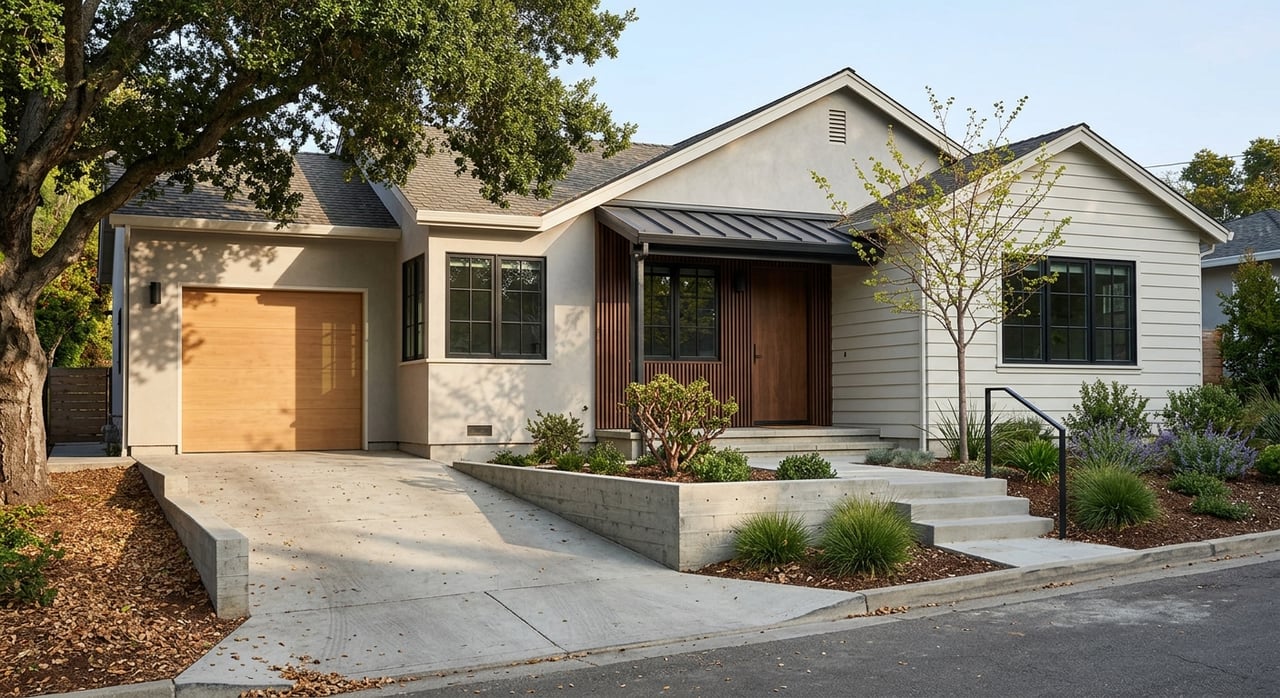
If you have ever wondered why two homes in San Carlos can feel so different despite sharing the same city name, the answer is usually micro-market location. In San Carlos, small shifts in topography, street pattern, and corridor access can change how a home lives day to day. When you understand the flats, the hills, and the main corridors, you can compare homes with more clarity and less guesswork. Let’s dive in.
San Carlos is not one uniform housing market. City planning documents separate out a pedestrian-oriented downtown core, a Laurel Street transition corridor, an East Side employment and redevelopment district, and hillside areas with different lot standards tied to slope, erosion, and drainage.
That matters because your decision often comes down to lifestyle tradeoffs, not just price or square footage. In practical terms, you are often comparing convenience, lot utility, and topography rather than simply comparing one San Carlos address to another.
City materials also show that San Carlos remains predominantly residential, while newer multifamily and mixed-use activity has clustered in a few corridor zones. That pattern helps explain why one part of town may feel quieter and more traditional, while another feels more active and connected.
The flats are the easiest place to start because they capture the most walkable and transit-oriented part of San Carlos. This area includes downtown, Laurel Street, station-adjacent streets, and nearby blocks that benefit from a flatter street layout and central access.
The city defines the Downtown and Historic Downtown Core along Laurel Street from Holly Street to Arroyo Street, including properties west to Walnut Street and the Civic Center. The historic core centers on the 1100 and 1200 blocks of San Carlos Avenue and the 600, 700, and 800 blocks of Laurel Street.
Laurel Street is described by the city as pedestrian friendly, with a grid street pattern, landscaping, pedestrian amenities, and rear-alley access that helps reduce curb cuts. For you as a buyer, that usually translates into a more connected street experience and easier day-to-day access to downtown destinations.
Homes in the flats tend to appeal to buyers who want easier access to downtown and transit. Caltrain places San Carlos in Zone 2, and current public service information says electrified trains run every 15 to 20 minutes during weekday rush and every 30 minutes on weekends.
SamTrans also identifies El Camino Real and San Carlos Avenue as a key bus access point. If your routine depends on rail or bus access, the flat core can offer a very different lifestyle than a home farther up the hill.
The city also notes that multifamily housing has been added downtown and along the Laurel Street and El Camino Real corridor north of Holly Street and south of Arroyo Street, with additional concentration along Old County Road and San Carlos Avenue. As a result, flat and corridor-adjacent streets may feel a bit more active and slightly denser than interior hillside locations.
The flat core often makes the most sense if you prioritize:
If your goal is convenience first, the flats deserve a close look.
The hills are a different housing product altogether. Here, the city treats land differently because slope conditions matter.
San Carlos proposed general plan amendments state that hillside parcels considered for subdivision or annexation should have larger minimum lot sizes than flat areas. The purpose is to help minimize slope instability, erosion, and drainage impacts.
That is an important signal for buyers. It tells you that hillside homes are not just flat-lot homes with a better view. They sit in an area where topography directly affects development standards, site planning, and how buyers evaluate a property.
In the hills, buyers are often drawn to larger lots, stronger privacy, and view potential. The tradeoff is that each property may come with more site-specific considerations, including steeper driveways, more varied lot usability, and a layout that depends heavily on the land itself.
San Carlos also emphasizes open space in these areas. The city’s Big Canyon Park and Eaton Park materials say the two parks together provide more than 73 acres of natural open space, with narrow rugged trails and views over the San Francisco Bay.
The draft general plan also says San Carlos has about 73 acres of city-park open space plus 86 additional acres designated as open space in the Land Use Element. For many buyers, that reinforces the hill-market appeal: more natural surroundings, more separation, and stronger topographic character.
The hills often make the most sense if you prioritize:
If you are comparing a hillside property with a flatter in-town home, the key question is not which one is better. It is which set of tradeoffs better fits your daily life.
Corridor locations form a third category that deserves its own lens. In San Carlos, El Camino Real, Laurel Street, San Carlos Avenue, Old County Road, and parts of the East Side all show signs of being shaped by transportation access, mixed-use planning, and ongoing land-use change.
El Camino Real is especially important. SamTrans describes the Central El Camino Real Multimodal Plan as an 8.5-mile planning effort involving San Mateo, Belmont, San Carlos, and Redwood City, with a focus on safer and more multimodal design along this major north-south route.
Within San Carlos, Laurel Street and El Camino Real are the clearest examples of corridor housing rather than classic interior neighborhood housing. The city describes Laurel south of Arroyo as a transition area where one- and two-story storefronts mix with residential and mixed-use buildings.
City planning materials say much of San Carlos’s future multifamily capacity is expected along El Camino Real, Laurel Street, Old County Road, San Carlos Avenue, and nearby roads. That does not tell you what any one home will do in value, but it does tell you where the city expects more evolution in use, access, and street design.
For you as a buyer, that means corridor homes often need a different evaluation process. You may want to weigh current convenience against future change in traffic patterns, parking conditions, nearby development, and street design.
This is also where the East Side Innovation District becomes relevant. City documents describe it as roughly 150 acres bounded by Holly Street, Brittan Avenue, Old County Road, and Highway 101, with a vision that includes a green boulevard on Industrial Road, open space, multimodal streets, shared parking, and congestion reduction.
Historically industrial and now increasingly shaped by life science and biotech redevelopment, the East Side is best understood as an employment and redevelopment district. That can influence nearby residential streets through traffic, parking, and future land-use change.
Corridor locations may be worth closer attention if you value:
These areas can be compelling, but they usually reward buyers who look carefully at both current conditions and future context.
When buyers get stuck in San Carlos, it is often because they are comparing homes across different micro-markets as if they are interchangeable. They are not.
A helpful way to narrow your search is to decide which of these three priorities matters most to you:
Once you know your priority, the home search gets more efficient. You stop asking whether every home checks every box and start asking whether the location type supports the life you actually want to live.
San Carlos behaves less like one citywide housing product and more like three overlapping ones: a convenience-led flat market, a land-and-view hill market, and an evolving corridor and east-side market. That framework is supported by the city’s land-use rules, transit network, and planning documents.
For buyers, this matters because the right choice is rarely about the best home in the abstract. It is about the best fit between location pattern and your priorities.
For sellers, this matters just as much. Positioning a home correctly starts with understanding which micro-market you are really in and which buyers are most likely to value that location story.
If you want help thinking through where your home fits or which part of San Carlos best matches your goals, Ektra Real Estate brings a neighborhood-first, data-driven lens to every move.
Stay up to date on the latest real estate trends.
June 25, 2026
June 18, 2026
June 11, 2026
June 4, 2026
May 28, 2026
May 21, 2026
We are proud to have helped so many in their journey here, and we value the trust our client's place in our relationships. Come join us to start your home journey!