Pricing Strategy In A Fast-Moving Redwood City Market
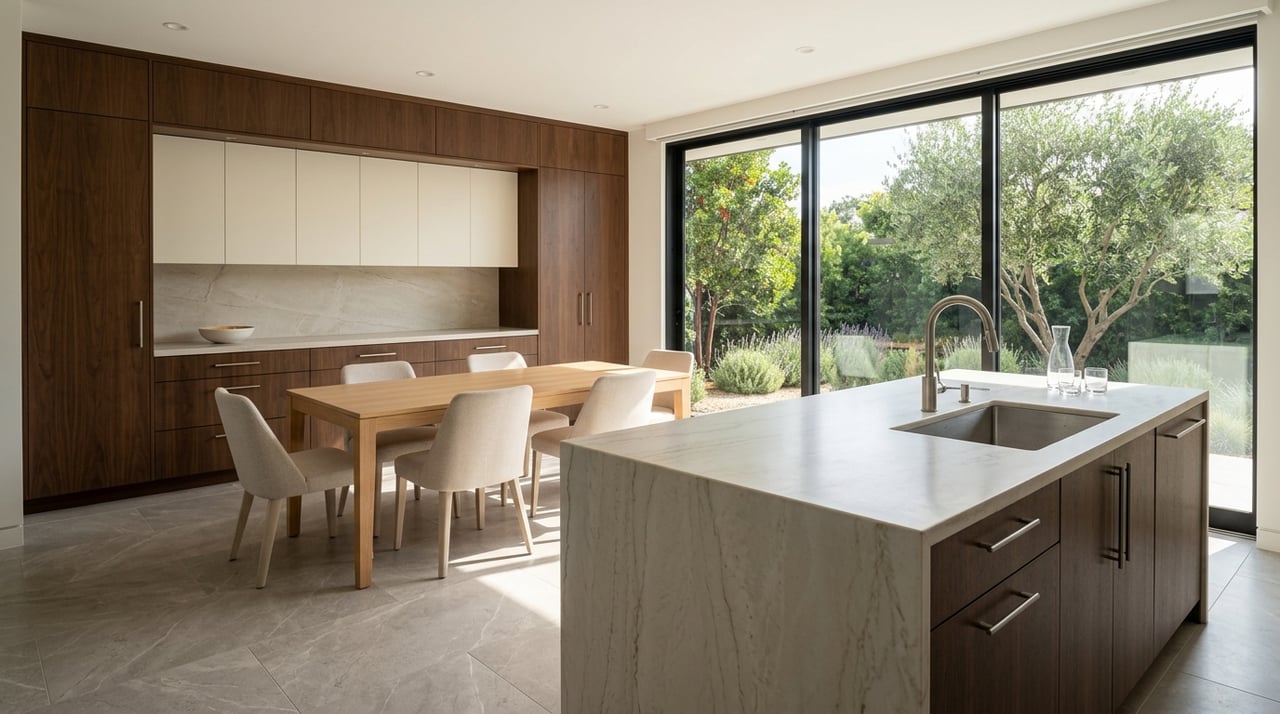
If you price your Redwood City home based on a citywide headline alone, you could leave money on the table or lose valuable momentum. That is especially true in a market where some homes draw multiple offers quickly while others sit longer and need a reset. The good news is that a smart pricing strategy is not guesswork. It is a clear process built around neighborhood-level data, buyer behavior, and timing. Let’s dive in.
Redwood City is moving fast, but it is not moving the same way in every pocket. According to Redfin’s Redwood City housing market data, the median sale price was $1.8 million in February 2026, median days on market were 13, homes sold for 103.4% of list price on average, and 51.7% sold above list. At the same time, 17.7% of homes had price drops.
That mix tells you something important. Buyers are still active, but they are selective. If your price matches the right local demand, you may create urgency. If it misses the market, buyers often notice quickly.
Mortgage rates also shape what buyers can and will pay. Freddie Mac reported the average 30-year fixed mortgage rate at 6.46% on April 2, 2026, and the National Association of Realtors notes that in higher-rate conditions, a lower asking price may be recommended to attract stronger interest. In other words, pricing has to reflect both local competition and current affordability.
One of the biggest mistakes sellers make is treating Redwood City like one uniform market. The City of Redwood City neighborhood framework recognizes distinct community areas such as Downtown, Edgewood Park, Farm Hill, Friendly Acres, Mt. Carmel, Redwood Oaks, and Redwood Shores. For sellers, that matters because buyers compare your home against nearby alternatives first, not the whole city.
Recent Redfin neighborhood data shows how much conditions can vary. Redwood Shores had a median sale price of $1.315 million and 34 days on market, while Redwood Oaks was at $1.9525 million and 48 days, and Mount Carmel was at $1.95 million and 24 days. Redfin’s city guide also points to higher-priced areas such as Farm Hill at $2.41 million and Emerald Hills at $4.23 million.
That spread is why a citywide median is only a starting point. A pricing strategy for a home in Mount Carmel should not be copied from one in Redwood Shores. Even within Redwood City, buyer expectations, pace, and price sensitivity change by area and property type.
There is one more nuance here. Some neighborhood stats are based on a small number of recent sales. Redfin notes that February 2026 sales counts included 16 in Redwood Shores, 8 in Redwood Oaks, and 7 in Mount Carmel, which means those figures are best used as directional context rather than a precise value formula.
That is why strong pricing relies on more than a single median number. You want a careful review of recent sold homes, current competition, pending activity, condition, and how your home compares on features buyers notice right away.
According to the National Association of Realtors’ consumer guide to home pricing, list price should reflect size, location, amenities, condition, and recent comparable properties. A strong comparative market analysis also looks at sold, under-contract, and active listings. That gives you a more realistic picture of where buyers are actually saying yes today.
In a fast-moving market, the right question is not just, “What is my home worth?” It is also, “What price will position my home to get the strongest response from the right buyers right now?” Those are related questions, but they are not always identical.
Before setting a price, you should weigh:
NAR also notes that sellers who want a faster sale may price more competitively, while sellers with more flexibility may choose a higher ask. That does not mean overpricing is the best move. It means your strategy should match your goals and your local competition.
Your first price is usually your best chance to capture attention. In Redwood City, where homes can move quickly, buyers tend to react strongly when a listing feels aligned with the market. They also react quickly when it does not.
Redfin’s city data shows the range of outcomes. One recent Redwood City home closed 14% over list after 38 days, while another sold 8% under list after 66 days. Those results highlight a core truth: list price is not just a number on a screen. It shapes who tours, who offers, and how much leverage you keep.
In stronger pockets, a slightly more competitive initial price can help create urgency and bring more buyers into the process early. This approach is often designed to increase attention in the first week, not to undersell the property. When multiple serious buyers engage at once, the market may push the final number higher.
An aspirational price can work in some cases, especially if you have more time and limited direct competition. But in a market where buyers are payment-conscious and well-informed, testing too high for too long can reduce momentum. Once a listing lingers, buyers may assume there is a pricing issue even if the home itself is strong.
Pricing and negotiation should work together. If your home is positioned well, setting an offer review date can help you compare buyers side by side instead of reacting to the first offer that arrives.
The National Association of Realtors explains in its multiple-offer guidance that sellers can accept the best offer or invite buyers to improve their terms when multiple offers are in play. It also notes that once you counter an offer, the original offer is void, so you should be clear about your priorities before responding.
When offers come in, the highest price is not always the strongest offer. You should also compare:
According to Redfin’s Compete Score explanation, competition is influenced by factors like competing offers, waived contingencies, sale-to-list ratio, and days on market. It also notes that common contingencies include appraisal, financing, inspection, sale, and title.
In some Redwood City areas, that matters a lot. Redfin indicates that in Redwood Shores many homes get multiple offers and some waive contingencies, while Redwood Oaks and Mount Carmel can still see multiple offers but with a less intense pace. That difference reinforces the need to match your pricing and review strategy to the specific neighborhood environment.
If you are preparing to sell in Redwood City, a smart pricing plan usually follows a few disciplined steps.
Look first at homes that are genuinely comparable in the same neighborhood or the nearest competing area. Focus on recent sold properties, then compare them with active and pending listings to understand where buyers are leaning now.
Price should reflect your actual home, not a generic median. Condition, updates, layout, lot utility, and amenities all affect buyer response. Two homes with similar square footage can perform very differently if one feels turnkey and the other needs work.
If your priority is speed and strong early activity, a sharper list price may be the better move. If you have more flexibility, you may choose a higher starting point, but it should still be grounded in evidence and current competition.
Before your home goes live, decide how you want to handle preemptive offers, review dates, and contingency strength. That way, when interest arrives quickly, you can respond from a plan instead of under pressure.
In a fast-moving Redwood City market, the best pricing strategy is rarely “price at the city median and hope.” The stronger approach is to price to the micro-market, weigh current mortgage-rate pressure, and think ahead about the type of offers your list price is likely to attract.
That is where a data-led, neighborhood-first process can make a real difference. When pricing, presentation, and negotiation line up, you put yourself in a better position to protect momentum and maximize your result.
If you are thinking about selling in Redwood City and want a tailored pricing conversation built around your neighborhood, competition, and timing, connect with Ektra Real Estate for a thoughtful, data-driven plan.
Stay up to date on the latest real estate trends.
August 25, 2026
Everything You Need to Know About Buying a Home in San Carlos, CA.

August 25, 2026
A Local's Guide to Dining on Laurel Street and Beyond in San Carlos, CA.
August 20, 2026
August 13, 2026
August 6, 2026
August 6, 2026
We are proud to have helped so many in their journey here, and we value the trust our client's place in our relationships. Come join us to start your home journey!