Is Your Redwood City ADU Really Exempt From the November Rent Control Vote?
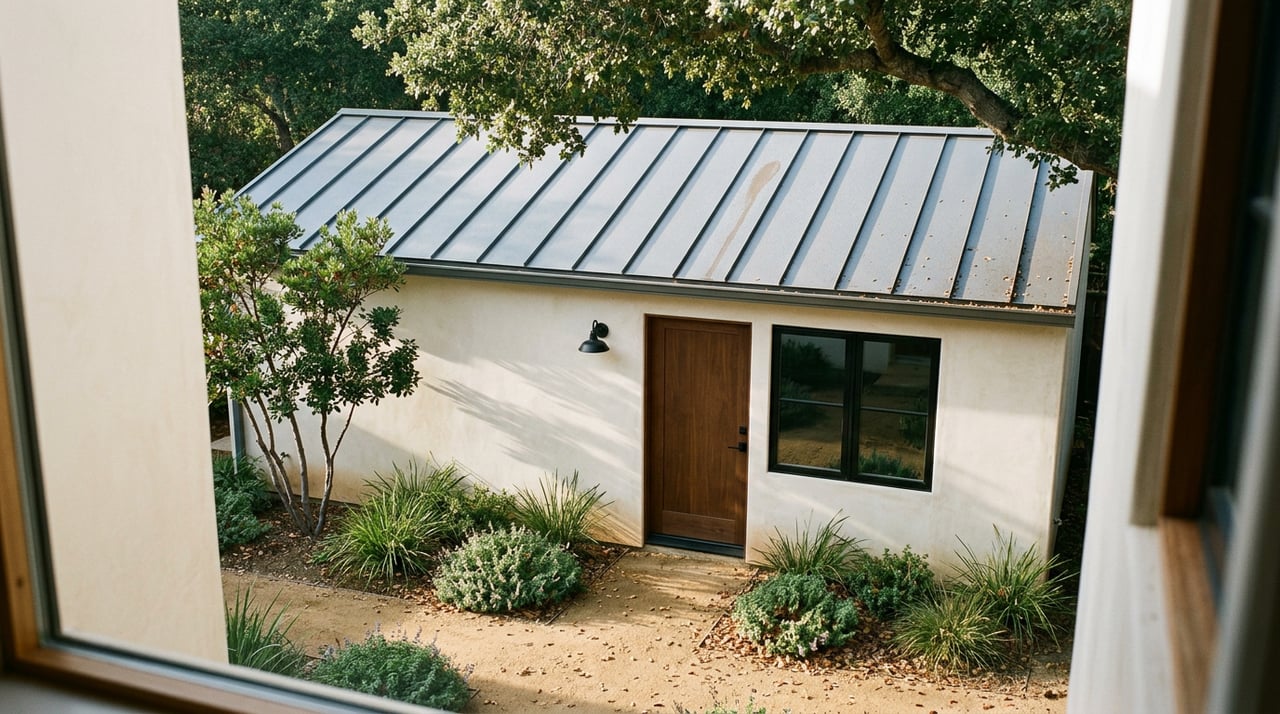
Every story written about Redwood City's rent control measure this year leads with the same reassurance: single-family homes are exempt. Condos are exempt. Anything built after February 1, 1995 is exempt. State law sees to that. If you're underwriting a Redwood City purchase with an ADU in the rent roll, that framing is doing a lot of work to make the deal feel simpler than it is.
The measure, known as the Fair and Affordable Housing Ordinance, will appear on Redwood City's November 3 ballot as the only local measure on the ticket. It's backed by Faith in Action Bay Area, which spent more than three years and two signature drives getting it there. On July 27, the city council voted not to adopt it outright and instead sent it to voters. By August 11, Mayor Elmer Martínez Saballos and council member Isabella Chu had signed the official argument against it for the voter guide. This is not a quiet local footnote. It's a contested, well-funded fight two months from a decision, and the outcome touches more of the housing stock than the headline number suggests.
Because of the state's Costa-Hawkins Rental Housing Act, the rent-cap portion of the measure can only reach units built before February 1, 1995. Single-family homes and condos are carved out entirely, regardless of age. City staff and the consultant Economic & Planning Systems put the reach of the rent cap at roughly 19 to 20 percent of Redwood City's housing stock, mostly older multifamily buildings.
That's the fact that made it into nearly every article. It's accurate. It's also not the whole ordinance.
The rent cap is genuinely narrow: 60 percent of the local Consumer Price Index, capped at 5 percent annually, with rents rolled back to their October 29, 2025 levels for covered units. But the document itself runs 46 pages, and by KQED's count only two of them deal with the rent cap. The rest cover evictions, relocation payments, right-to-return rights, and a new city fee structure, and those sections are written to reach far more broadly than the rent cap does, including single-family homes and ADUs.
That distinction matters if you're an owner-occupant renting out a detached unit. Under the state's Tenant Protection Act, an owner-occupied single-family home renting out no more than two bedrooms or units, including an ADU, is generally exempt from just-cause eviction requirements. That's the baseline most ADU owners in the region plan around: sell the main house, keep renting the ADU, evict on your own terms if you need to reoccupy. Redwood City's own Tenant Protection Ordinance, which took effect January 1, 2026, preserves that logic. Its stated exemptions include owner-occupied homes and non-corporate single-family properties.
The ballot measure would go further. It expands just-cause protections, lengthens relocation assistance to four times the monthly fair market rent or $12,000, whichever is greater, with an additional $6,000 for senior, disabled, or terminally ill tenants, and adds a right-to-return requirement after substantial remodels or a demolition and rebuild within five years. None of that is limited to the pre-1995 buildings the rent cap targets. If it passes, whether a Redwood City ADU rental still qualifies for the owner-occupied exemption depends on how the measure's language interacts with the existing state and local exemptions, and that is not something the coverage to date resolves cleanly.
| Protection | State baseline (AB 1482) | Redwood City TPO (effective Jan. 1, 2026) | Proposed ballot measure |
|---|---|---|---|
| Annual rent increase cap | 5% + local CPI, max 10% | Same as state | 60% of CPI, max 5%, pre-1995 units only |
| Just-cause eviction for owner-occupied SFH/ADU | Exempt if owner rents ≤2 bedrooms/units | Exempt, consistent with state | Reach extends to "nearly all rentals, including single-family homes and ADUs" per KQED's review |
| No-fault relocation payment | 1 month's rent (typical) | Reinstated city relocation requirements | 4x fair market rent or $12,000, plus $6,000 for protected tenants |
| Right to return after remodel/demolition | Limited | Standard remodel protections | Extended to demolition-rebuild within 5 years |
Read across that table and the pattern is clear. The rent cap stays narrow because state law forces it to. Everything else in the measure was written with more room to move, and an ADU that currently relies on the state exemption sits closer to that broader language than the rent-cap headline implies.
The council's own consultant estimated the new rent stabilization and tenant protection program would cost the city between $4 million and roughly $11 million a year to run, while the measure's proposed landlord fees of $84 to $120 per unit would recover only a fraction of that. That gap is the core of the city's formal opposition. Vice Mayor Kaia Eakin summed up the council's discomfort at a June meeting:
"This is for the voters to decide. This is not for us to decide."
For a buyer, that funding gap is worth tracking past November regardless of the outcome. A program this underfunded either gets amended, gets litigated, or gets absorbed into the city's budget in ways that could show up later as new landlord fees. None of that is settled, and none of it should be treated as settled before it happens.
Neither San Carlos nor Belmont currently has a local rent-control ordinance of its own. Both rely on the state floor set by AB 1482, the same baseline Redwood City used before it adopted its own Tenant Protection Ordinance this year. That means an ADU in San Carlos or Belmont today sits under one regulatory layer. A comparable ADU in Redwood City already sits under two, the state law and the city's TPO, and could soon sit under three if the November measure passes.
This isn't an argument that one city is better positioned than another. It's a reminder that "the Peninsula" isn't one regulatory environment. If ADU income is part of why you're comparing these three cities in the first place, the local layer stacked on top of the state baseline is exactly the kind of detail that changes the math on a pro forma, and it's the kind of detail that rarely shows up until you're already reading a disclosure package.
Don't assume the state-law ADU exemption transfers cleanly to Redwood City's new measure if it passes. Ask your agent to pull the actual city attorney's ballot title and summary rather than relying on secondhand paraphrase, since that document is the version tenants and courts will eventually rely on too. If you're underwriting a specific property, ask the seller for the current tenancy status of any ADU, since a unit's history under Redwood City's Tenant Protection Ordinance affects what obligations transfer with the sale. And build a second scenario into your pro forma for a passed measure, since the relocation and right-to-return provisions increase the cost of ever needing to reclaim the unit.
Does this affect a home I plan to owner-occupy with a rented ADU? Possibly, depending on how the eviction and relocation sections interact with the existing owner-occupied exemption. That interaction isn't clearly resolved in current reporting, which is reason enough to get the specific language reviewed before you close, not after.
What happens if the measure fails on November 3? Redwood City's Tenant Protection Ordinance, adopted separately and already in effect since January 1, 2026, would remain the local baseline on top of state law. The broader eviction and fee provisions in the ballot measure would not take effect.
Does any of this apply in San Carlos or Belmont? Not currently. Both cities operate under the state AB 1482 baseline alone, with no local rent-control or expanded tenant-protection ordinance layered on top as of this writing.
Buying with ADU income in the plan means underwriting the regulation, not just the rent. If you're weighing a Redwood City property against something in San Carlos or Belmont and want to talk through what this measure could mean for your specific numbers, Ektra Real Estate can walk the pro forma with you before you're locked into an offer.
Stay up to date on the latest real estate trends.
September 17, 2026

September 15, 2026
What to Expect From Life in the City of Good Living.

September 15, 2026
Where Locals Actually Get Their Coffee Fix.
September 10, 2026
September 3, 2026
August 27, 2026
We are proud to have helped so many in their journey here, and we value the trust our client's place in our relationships. Come join us to start your home journey!