Did Anything Actually Change When Belmont's NDNU Campus Finally Sold?
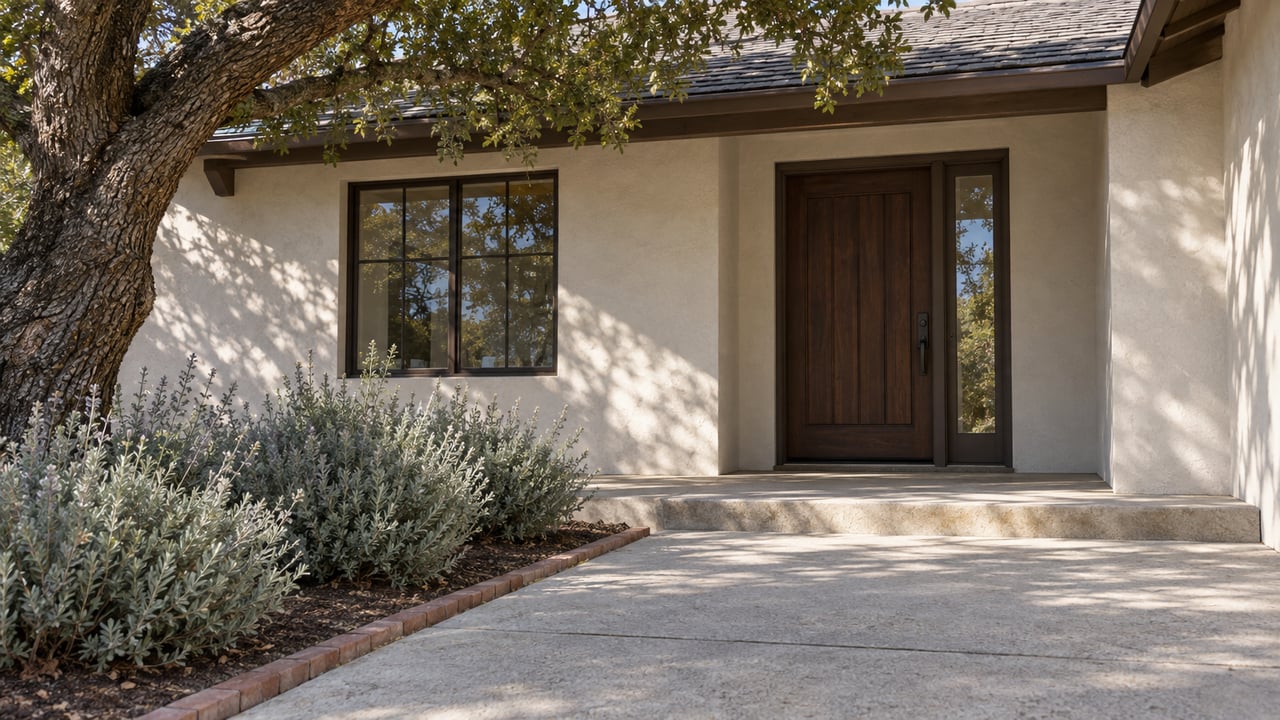
Drive down Ralston Avenue past the wrought iron gates of the old Notre Dame de Namur University campus this month and it looks almost exactly like it did a year ago. Same fenced lawn in front of Ralston Hall Mansion. Same students walking between buildings. Same quiet stretch of road that residents have driven past for decades without much reason to stop. If you'd heard that the sale of this campus finally closed, you might expect something to look different by now. It doesn't, and that gap between what the news said and what the hillside actually shows is worth understanding.
The short version: Notre Dame de Namur University sold its 96.5-acre Belmont property to UC Investments, the University of California's investment arm, and the deal received final Vatican approval and formally closed on September 29, 2025. That's the headline most Belmont residents half-remember. What gets lost is that closing a real estate transaction and changing a campus are two different timelines, and the terms of this particular sale stretched the second one out on purpose.
To understand why nothing looks different, it helps to know how strange the last year of this story actually was.
Stanford University had held an option to purchase the NDNU campus since 2021, with a plan that would have relocated some Stanford programs from Palo Alto and rebranded the site as Stanford Belmont. City staff spent years working through a conceptual development plan with Stanford, including an environmental review process, ahead of what looked like a done deal.
Then, in February 2025, Stanford walked away. The university cited a longer than expected timeline for establishing academic uses on the site, along with what it called factors that could not be anticipated when the option agreement was first signed four years earlier.
What happened next moved fast by university real estate standards. NDNU president Beth Martin has said she received a cold call from UC Investments within days of the Stanford announcement, expressing interest in the property. By May 27, 2025, NDNU and UC Investments had a signed sale agreement. By late September, after a review process that required sign-off from the Sisters of Notre Dame de Namur's leadership and, because of NDNU's Catholic affiliation, formal approval from the Vatican, the sale closed.
That single detail, the involvement of Rome in a Belmont property transaction, is the kind of thing that explains why this deal took the shape it did. It wasn't a straightforward commercial sale. It was a religious order transferring stewardship of a campus its Sisters had held since 1923, which is part of why the terms are built around continuity rather than immediate change.
The sale agreement gives NDNU a leaseback of up to five years on the campus it just sold. In practice, that means the university keeps teaching in the same buildings, with the same programs, for a stretch of time that could run through the end of the decade.
NDNU has already been transitioning for a while. The university stopped offering a four-year residential undergraduate program in 2021 and now operates primarily as a graduate school with degree completion options for adults, a shift that left it with more campus than it needed. Martin has said publicly that the campus is too spread out for the size of the current operation, which is part of the financial logic behind the sale.
So the people who currently occupy the buildings along Ralston Avenue aren't leaving on any near-term schedule. NDNU has said it plans to relocate to a new site within San Mateo County once the leaseback period ends, but no location or firm date has been announced. For residents wondering when the current campus activity will wind down, the honest answer is that the university itself hasn't committed to one yet.
Here's the detail that tends to get flattened in coverage of the sale: Water Dog Lake, Belmont's largest parkland, was included in the 96.5 acres that changed hands, but its public use is governed by a separate lease that has nothing to do with who holds title to the land.
The City of Belmont has operated the 50.5-acre preserve, including its hiking trails and stocked fishing lake, under a lease with roughly 40 years remaining. That lease predates the UC Investments purchase and survives it. Whether the underlying owner is NDNU, Stanford, or UC Investments, the city's right to run Water Dog Lake as a public park doesn't change, because that arrangement was never part of what NDNU was negotiating away.
This matters if you've ever hiked Water Dog Lake and wondered whether news of a campus sale meant anything for trail access. It didn't, and by the terms of the existing lease, it isn't going to for a long time.
The other piece of the deal that gets mentioned in every press release but rarely explained is the promise to renovate Ralston Hall Mansion and its Carriage House, both listed as National and California registered historic landmarks. UC Investments committed to that renovation as part of the sale terms.
What hasn't been announced is a start date, a budget, or a scope of work. The mansion and carriage house are the most visible structures on the property from the road, and they're also the ones with the most historical constraints on any renovation, given their landmark status. Belmont residents who've watched Ralston Hall sit behind a fence for years shouldn't expect that to change on any particular timeline based on what's public so far.
For an acquisition this size, UC Investments has been notably vague about what comes next, and that vagueness is worth taking at face value rather than reading into.
Dianne Klein, an investment adviser for UC Investments, told the San Francisco Chronicle that the university system envisions the property might eventually house "an institute or other such research center." That's a possibility, not a plan. There's no announced project, no filed application, and no timeline attached to it.
Belmont's mayor at the time of the announcement, Julia Mates, noted that the city only recently learned of the discussions between NDNU and UC Investments before the deal became public, and said she was looking forward to more communication about what UC Investments intends for the site. As of now, that communication hasn't produced a public redevelopment plan. UC Investments has described the purchase as part of its long-term "centennial" investing strategy, the kind of holding period measured in decades rather than years, which is consistent with a buyer that isn't in a hurry to announce what comes next.
Put the pieces together and the picture is less dramatic than the headlines from last year suggested, but more useful for anyone trying to understand their own neighborhood. The ownership of the land changed. The people using it, the trails running through it, and the buildings standing on it have not, and by the terms of the deal itself, most of that is set to hold steady for years.
If you're the kind of resident who's driven past that fence on Ralston Avenue and wondered what was going on, the honest answer right now is: not much, on purpose. The interesting part of this story isn't what changed. It's how much was built to not change for a while.
If you're curious about what a property like this, or any home near a site with this kind of institutional history, might mean for your own plans down the road, Ektra Real Estate knows the Belmont market well enough to talk through it in plain terms.
Stay up to date on the latest real estate trends.
October 8, 2026
October 1, 2026
September 24, 2026
September 17, 2026

September 15, 2026
What to Expect From Life in the City of Good Living.

September 15, 2026
Where Locals Actually Get Their Coffee Fix.
We are proud to have helped so many in their journey here, and we value the trust our client's place in our relationships. Come join us to start your home journey!